


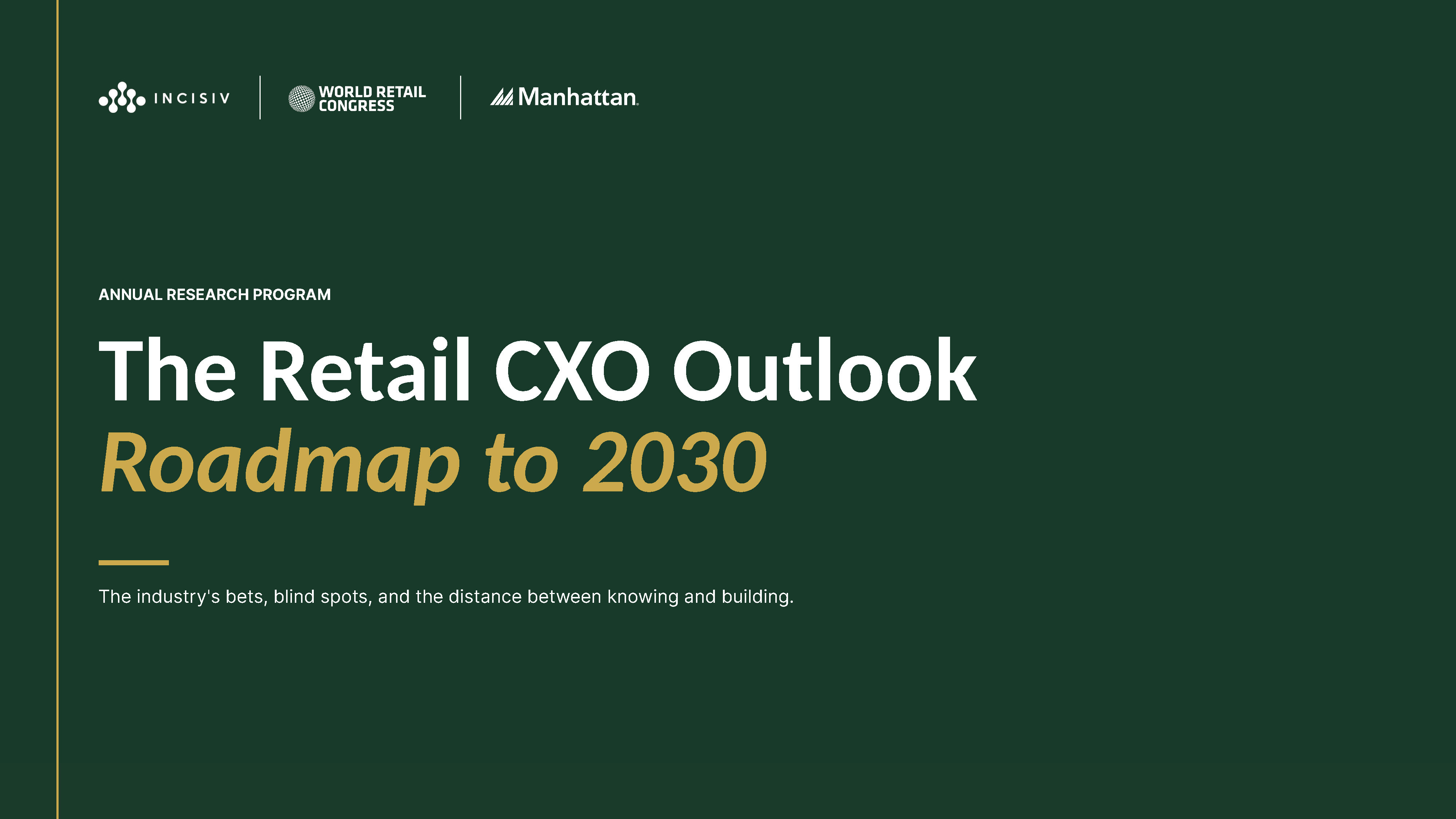
Annual Research Program
The Retail CXO Outlook Roadmap to 2030
Q2, 2026
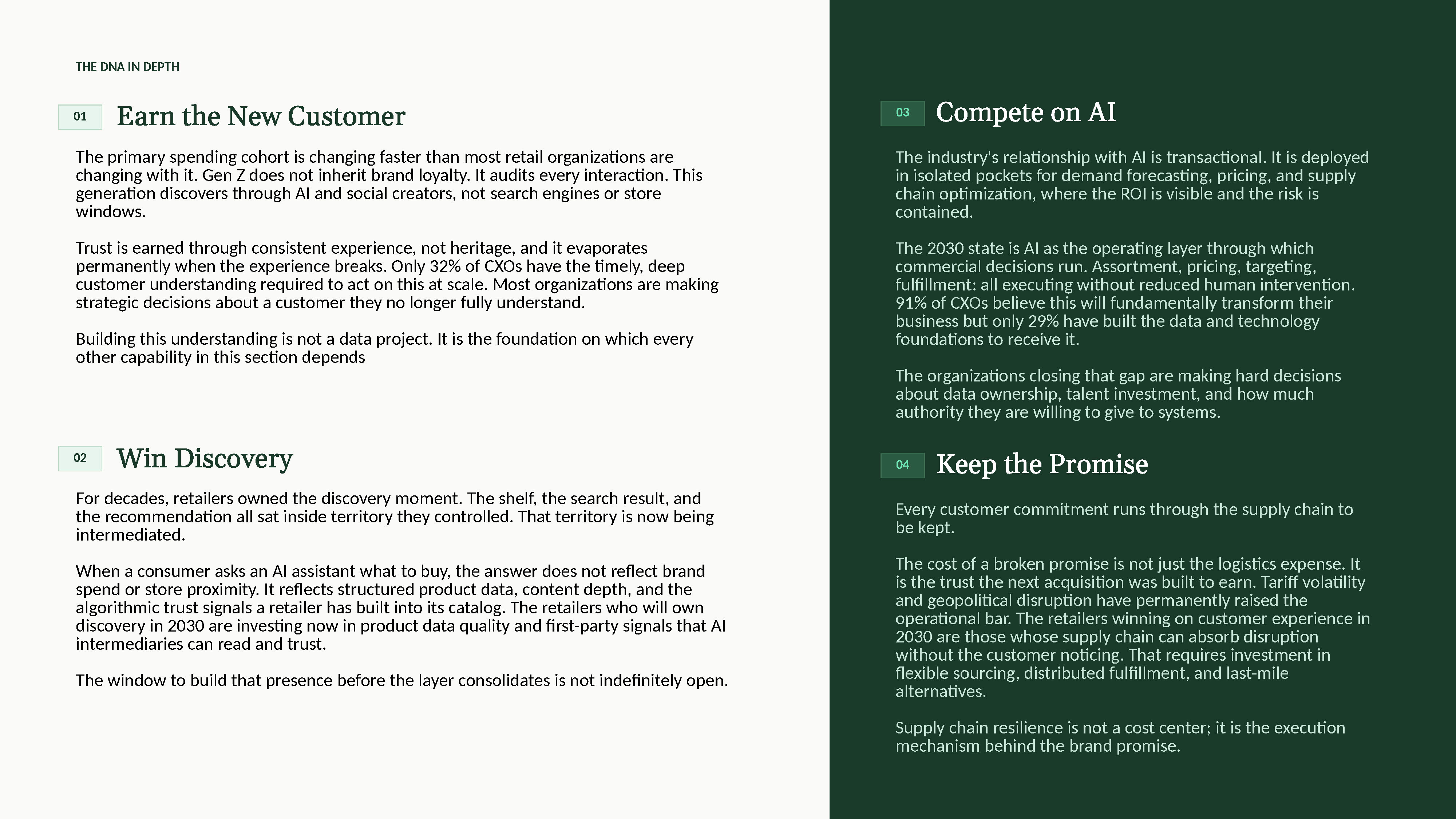
Retail's rules are being rewritten. AI now mediates discovery before consumers reach a brand's storefront. Platform giants compete on data advantages incumbents cannot match. Tariff volatility is no longer a forecast risk; it is today's operating reality.
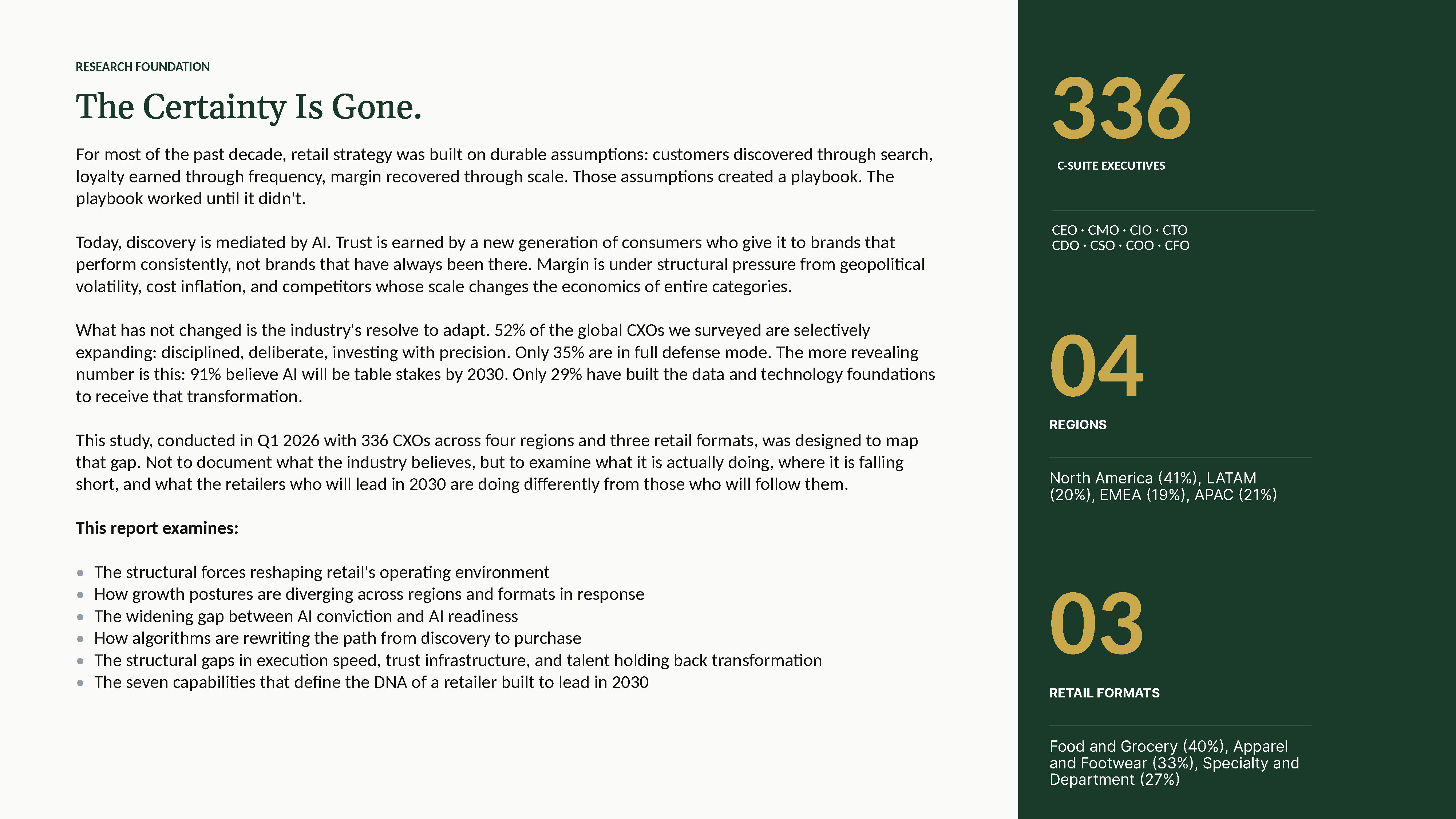
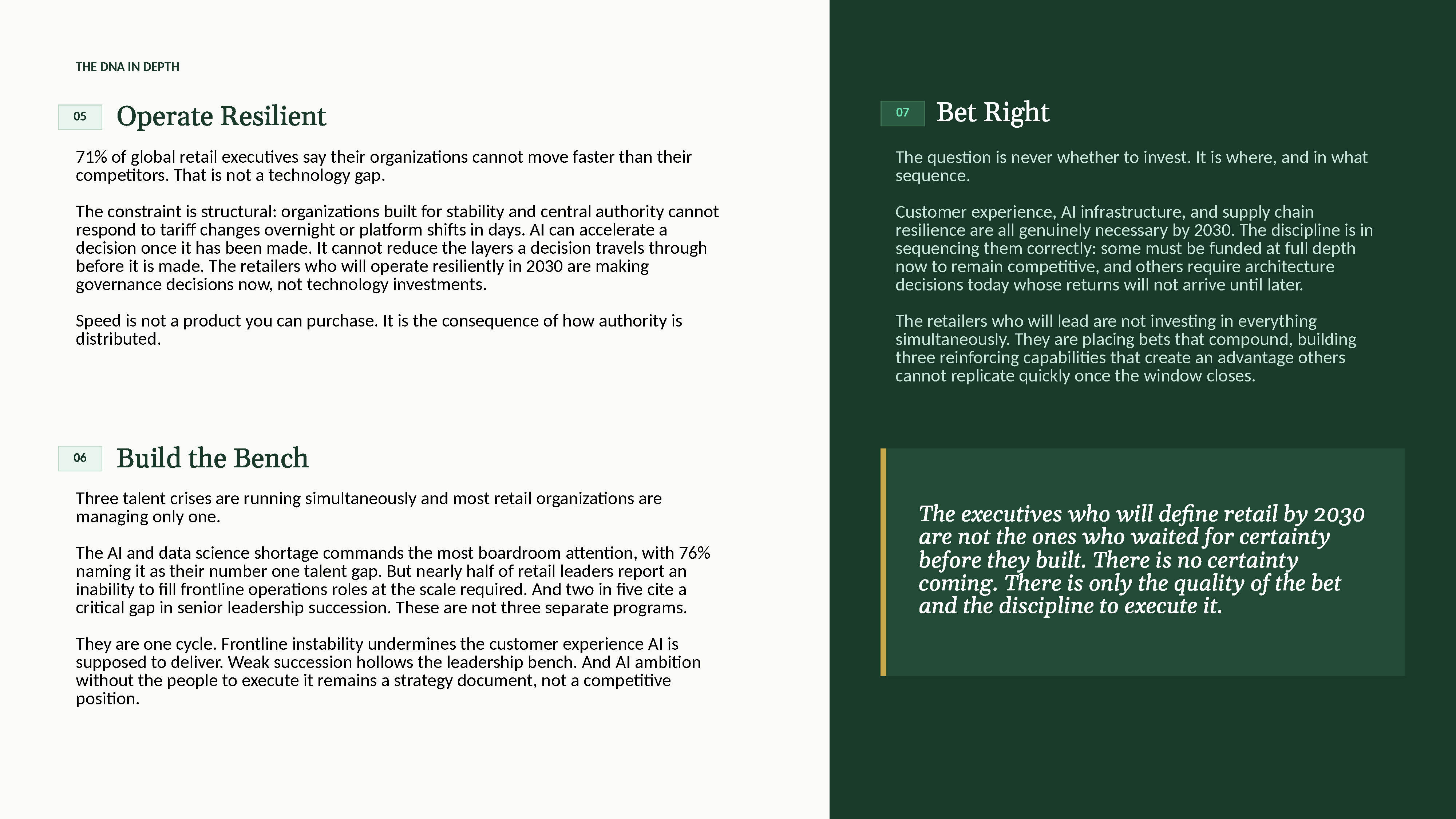
The report surveys 336 C-suite executives across four regions and three retail formats to map the gap between where the industry thinks it needs to go and what it is actually building. It identifies seven capabilities that separate the retailers who will lead from those who will follow, and reveals why the 56-percentage-point gap between AI conviction and AI readiness is the most consequential challenge retail faces before 2030.
FOUR KEY B2C COMMERCE IMPERATIVES
 Incisiv
Here’s a preview of the report. The full report is available for free download via the form below.
As consumers continue to reshape their expectations,
enterprises must contend with a uniquely challenging landscape.
The consumer technology landscape is forever changing.
From Pinterest to TikTok, WeChat to Instagram, new experiences can rapidly gain consumer adoption and relevance.

From augmented reality to voice, smartwatches to chatbots, consumers are constantly embracing new interaction paradigms.
Commoditized convenience is eroding loyalty and margin.
Consumers expect convenience. If you can't deliver it, they'll go elsewhere - e.g. next day shipping becoming the new standard.
Walmart will reportedly lose USD 1 billion on eCommerce revenue of USD 21 billion this year as it faces challenges in its bid to complete against Amazon – from trouble integrating its DNVB acquisitions to impact on margin from its next-day delivery operations.
Consumers value experiences that are curated to fit their lives better.
They want to engage, be served, and transact at their time, their pace, their place. They have little patience, infinite choice and the freedom to swipe left at the slightest hint of friction.