
Dated: March 6, 2026

Welcome to this month’s edition of The Dirty Martini Newsletter.
The B2B Tech world is coming off a whirlwind of January/February events (CES, NRF, Euroshop, FMI) and Sales Kickoffs, only to step back into March with the onslaught of Shoptalk and Q2 User Group Conferences. AND if you’re in the lucky group that lives in the Northeast, this winter hasn’t made things any easier!
Warmer temperatures, however, are on the way, and next quarter’s pipeline will wait for no one. Business is moving faster than ever, and disruption is the norm. As you start to execute your plans for 2026, this newsletter is designed to provide you with help and guidance on where the industry is going and how B2B marketers can more effectively keep up with the pace of change.
Enjoy this issue of the Dirty Martini Digest.
The Dirty Details
In partnership with Verizon and Cisco, we released our fifth annual study across grocery and specialty segments: Connected Retail Experience Study: The New Omnichannel Reality: AI is Required to Compete, yet Hard to Implement.
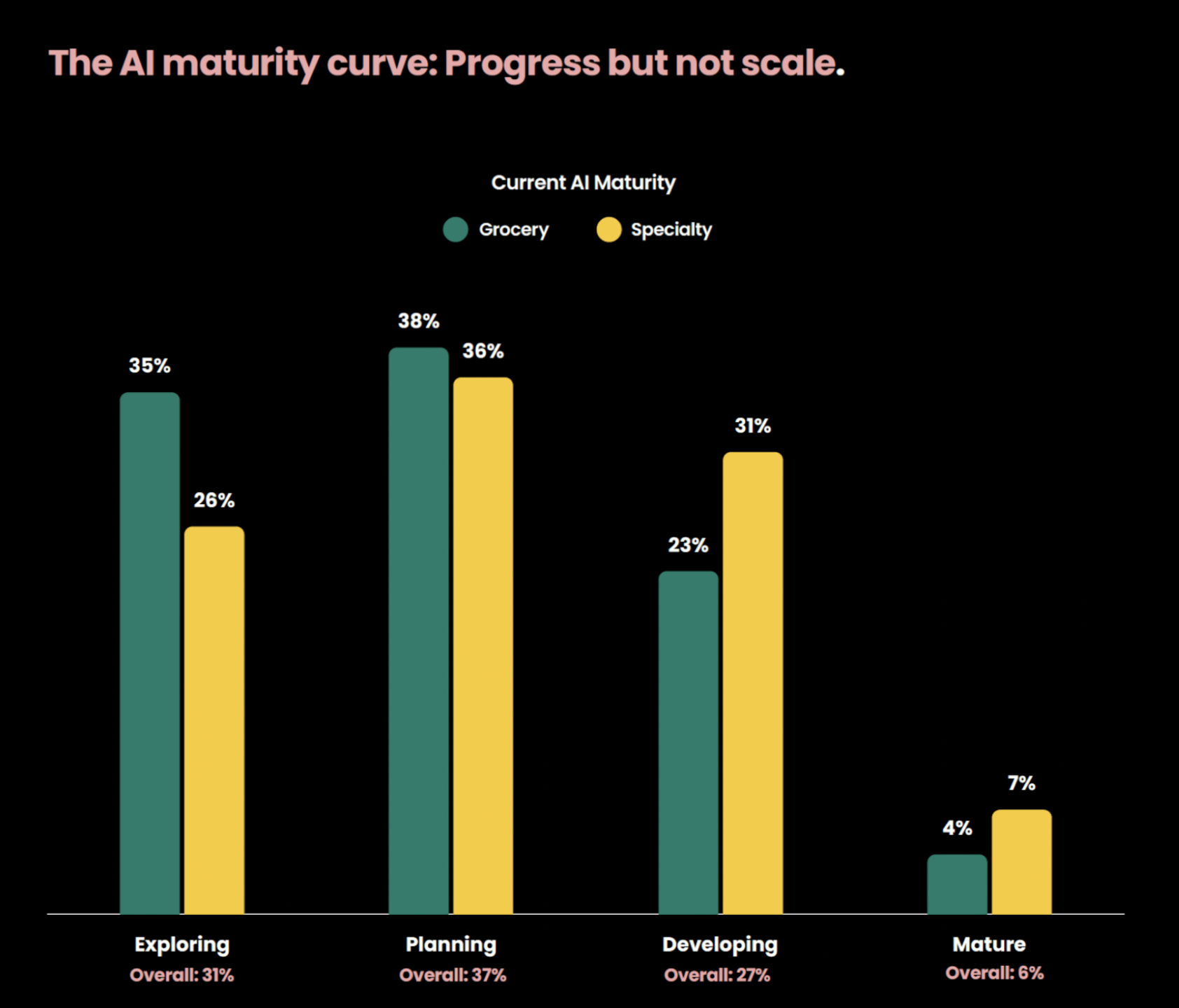
The headline? AI is now universally acknowledged as table stakes — 83% of retailers say it's necessary to compete — but only 6% consider their AI capabilities mature. The ambition-to-execution gap is real, and it's showing up across personalization, associate enablement, and network readiness. Let's dive in…
The Personalization Paradox: It's getting worse, not better. 44% of retailers say in-store personalization is important, but only 16% are satisfied with what they're delivering. Drop into omnichannel and satisfaction falls to just 12%. Siloed data and disconnected systems continue to block progress.
What this means for B2B Tech Marketing
- If you sell anything that touches customer data unification, real-time decisioning, or cross-channel orchestration, this gap is your entire pitch. The problem isn't awareness — it's execution. Lead with how you close the gap, not why it matters.
- Specialty retailers report higher importance and slightly better satisfaction with personalization than grocery. Segment your messaging accordingly — the pain is the same, but the starting points are different.
Bet on associates, not just algorithms. Mobile tools deployed for associates have doubled in the past two years. Push-to-talk, dedicated Wi-Fi, inventory apps, and video-based training are now table stakes.
The shift is clear: with staffing challenges persisting, the focus has moved from hiring more people to making each associate more effective on the floor.
What this means for B2B Tech Marketing
- Associate enablement is the most active investment area in stores right now. If your solution touches workforce productivity, training, or real-time information access, this is your moment. The buyer is listening.
- Access to customer data on mobile is expected to grow from 40% to 56% deployment within two years. That's a signal that retailers want associates armed with the same intelligence that powers their digital channels.
AI enthusiasm is universal. AI execution is not. 68% of retailers are still exploring or planning their AI strategy.
The jump from planning to production is where momentum stalls — complicated by:
- Poor or siloed data: (55%)
- System integration challenges: (48%)
- Shortage of specialized talent: (44%)
Grocers are deploying AI against operational use cases like inventory forecasting, workforce scheduling, and pricing. Specialty retailers are leaning into customer-facing applications: personalized recommendations, chatbots, and behavior analytics.
What this means for B2B Tech Marketing
- Stop leading with AI capabilities and start leading with data readiness. 56% of retailers rank foundational data infrastructure as their top AI investment priority. If you can help a retailer get their data house in order, you've earned the right to talk about what AI can do with it.
- Tailor your use-case narrative by segment. Grocery buyers respond to operational efficiency stories (margin, waste, labor). Specialty buyers respond to customer engagement stories (relevance, conversion, lifetime value).
The network is the new bottleneck. 67% of network upgrades are now driven by AI and ML applications, yet only 39% of retailers are satisfied with their edge computing support, and 49% with managing peak traffic. This is already translating to real losses — 61% of retailers report revenue impact from slow or unreliable digital experiences. As AI workloads move closer to the store, network performance is no longer an IT concern. It's a commercial one.
What this means for B2B Tech Marketing
- If you're in the infrastructure, connectivity, or edge computing space, this data reframes the conversation from cost-center to revenue-enabler. Network modernization is no longer a facilities discussion — it's a P&L discussion.
- For non-infrastructure vendors: understand that your AI-powered solution is only as good as the network it runs on. Partner messaging with connectivity providers isn't optional — it's how you de-risk the buyer's decision.
The data from this study is deep — we'll continue to share insights in the next edition. To access the full report, [download the 2026 Connected Retail Experience Study here].
Dive deeper into our cross-industry research and content.
This month, we released a new report — Unified Commerce in an AI World: What Breaks When Intelligence Outpaces Infrastructure. The premise is blunt: the AI experimentation phase is over. AI agents in 2026 don't just chat — they reason across product catalogs, negotiate fulfillment options, and execute purchases. The question is whether you've built the infrastructure AI actually requires, or whether you're automating old inefficiencies at a new speed.
The data backs up the urgency. MIT reports that 95% of enterprise generative AI pilots fail to deliver demonstrable ROI. Our own research shows that while 38% of retailers say their transformation initiatives are in advanced stages, only 17% rate themselves as "Leading" in unified commerce maturity — and 84% of organizations are still making decisions with incomplete information.
The playbook builds its argument across five themes:
- The AI mandate. What separates leaders is whether AI can reason across unified, real-time data and act through systems designed for automation. When customer profiles, inventory, and fulfillment operate in silos, AI makes conservative choices, generates exceptions, and delivers limited impact. Worse — many retailers are deploying AI on top of legacy operating models built for human decision-making.
- AI doesn't fix bad data — it industrializes it. The performance gap isn't about smarter models. It's about data architecture. Most retail stacks weren't built for unified, real-time data, forcing AI to act on partial truth. Latency turns intelligence into risk. Inconsistent data creates exception-driven execution. And when product, pricing, inventory, and fulfillment data live in silos, AI either guesses conservatively or acts confidently without full context. Neither outcome is good.
- The unified foundation illusion. Retailers have long mistaken well-connected middleware for true unity, but those digital bridges are buckling under the weight of machine-speed AI. Integration moves data between systems but doesn't resolve conflicts. "Near real-time" hides reconciliation delays AI can't tolerate. And when pricing, availability, and fulfillment are owned by separate systems, optimization happens locally rather than economically.
- What AI-ready unified commerce actually requires. Three architectural shifts separate retailers automating fragmented operations from those enabling unified intelligence:
- a single source of truth (at AI speed, synchronized copies behave like bad data)
- real-time event streams (e.g., every click, sale, return, and exception processed as it happens),
- zero-reconciliation integrity (e.g., eliminating the need for humans to determine which data is correct).
The payoff is real — retailers with advanced unified commerce maturity report 23% faster inventory turnover, 22% lower acquisition costs, 96% order promise accuracy, and up to 3x revenue growth.
- The path forward. AI in commerce is evolving along three dimensions retailers must prepare for:
- Evolving from insight to prescriptive orchestration (AI that executes strategies, not just suggests them),
- The agentic shift (autonomous systems that simulate thousands of scenarios to solve operational problems in real time),
- The trust mandate (explainable AI with clear audit trails linking every decision back to high-integrity data). Human roles don't vanish — they evolve from executing decisions to governing models and setting strategic guardrails.
Read the full Market Snapshot: Unified Commerce in an AI World.
JELLO SHOT!!
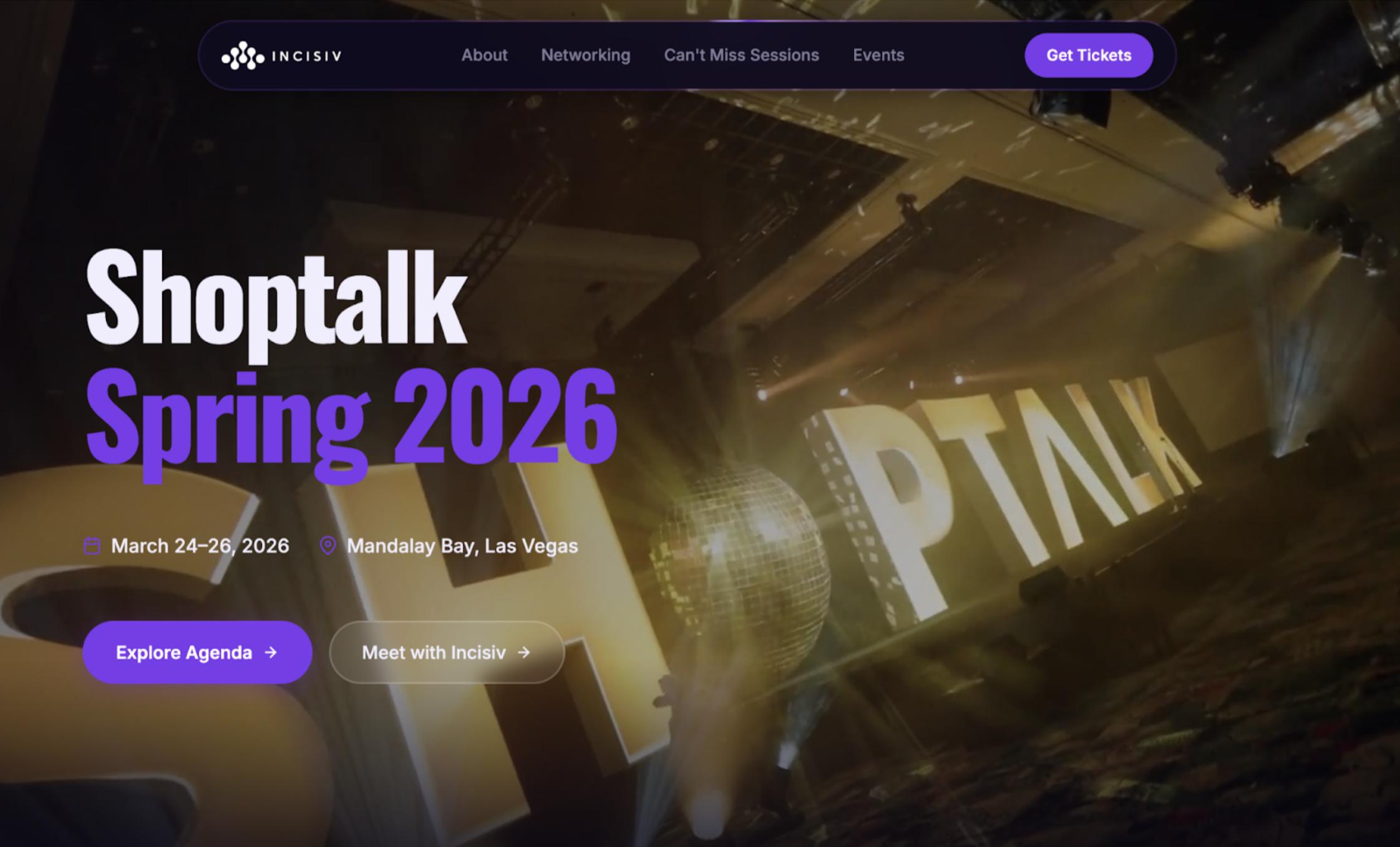
Deviating from our normal NL flow to highlight this month’s next big event, Shoptalk Spring. The show brings together the full community of retail, brands, tech, and the investment ecosystem to discuss where the industry is heading. We’ve assembled a PREVIEW of our ‘chosen agenda’. Take a look, and if you’re heading there, please reach out, and we’ll arrange time to connect with the Incisiv Team!
Straight from the Shaker
Get practical insights and best practices straight from our industry experts as we shake up and serve up our knowledge to help you improve your go-to-market strategies. We share tips each month to help you stay ahead of the game.
Continuing our partnership series, this piece tackles the uncomfortable truth hiding inside most partner ecosystems: they look great in strategy decks and fall apart the moment a customer actually needs them to work together.
The data is stark. KPMG reports that 75% of executives view partner ecosystems as essential to scaling innovation. Forrester says two-thirds expect partner-influenced revenue to grow above last year's levels. Yet only 13% of organizations say their ecosystem practices are highly refined and consistently delivering outcomes. That gap between strategic importance and operational execution is where value goes to die.
Partnerships don't collapse dramatically. They erode through small disconnects that customers experience as dysfunction. We see this play out in three predictable patterns:
- The accountability vacuum. Research shows 68% of companies struggle with unclear role definition across partner networks. If nobody owns the space between partners, nobody owns the customer outcome.
- The go-to-market gap. Rarely are sales teams enabled with materials that tell the "better together" story. Rarely are campaigns built to educate the market on the power of the partnership. The responsibility for this work falls into a gray area, the budget is hard to find, and the partnership quietly becomes a logo on a slide rather than a pipeline engine. Sound familiar?
- The incentive misalignment. In multi-partner solutions, each company optimizes for what they're measured on, such as service attachment, product pull-through, utilization, and speed to close. Those individual objectives add up to a fragmented outcome for the buyer. KPMG's research confirms this — aligning goals and expectations among partners is the single biggest ecosystem challenge, cited by 71% of organizations.
Successful partner organizations do it differently. They design for execution from day one, not after the partnership is announced. Three design principles separate them:
- The Invisible Infrastructure. Successful partnerships build shared workflows where teams operate as a single unit from the start — not escalation paths that activate during crises. When a customer engages with the ecosystem, they shouldn't detect where one partner's responsibility ends and another's begins.
- The Utility of Truth. Technical connectivity isn't operational integration. Two systems can exchange data through APIs while still requiring humans to interpret and translate context at every handoff. Production-ready integration means customer intent, history, and situational context travel seamlessly across partner boundaries. If customers can feel the integration points, the integration wasn't built for execution.
- Mutual Risk. Activity metrics alone don't drive execution. Leaders set up outcome-based ecosystem measurement, such as milestone-based payouts tied to onboarding completion or joint success bonuses triggered by measurable customer impact.
The bottom line: in a market where everyone has partnerships, competitive advantage belongs to those who make them actually work. The execution gap isn't inevitable. It's a design choice.
To go deeper, check out the full blog: The Power of Partnerships: Driving Value from Your Tech Partner Ecosystem.
On the House
Sip on our team's latest research, speaking sessions, and industry news with a quick scan of our recently published and upcoming work and key takeaways.
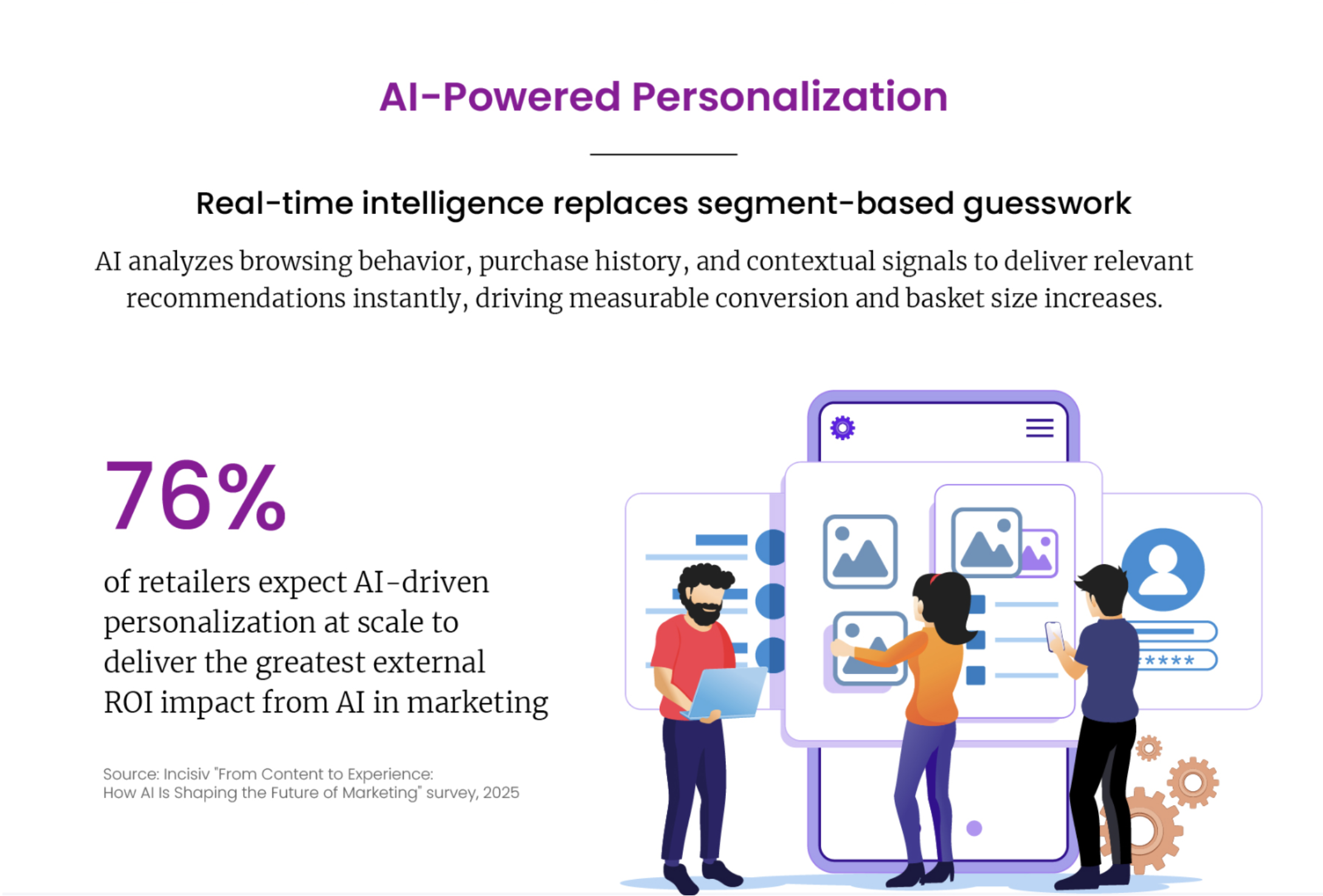
- The Top 5 Use-Cases for AI- There is a never-ending flow of AI-related content. For a quick hit perspective on what our research shows as the use cases that will be most impactful to the industry, check out our Infographic. Here’s a teaser:
- In our ongoing effort to keep the industry educated on the latest in how technology is transforming the industry, we’ve launched an ongoing series called Incisiv Insights. These will be ongoing articles, ebooks, and community dinners for our clients to consume as they see fit. Check out a few of our first pieces:

Second Round - Industry Happenings…
March and April are chock full of activity. We hope to see you at one or more of these industry events.

Shoptalk Spring Technology Stage: Driving Costs Out of Fulfillment and Delivery.
If you’re in the supply chain space, don’t miss Incisiv's Chief Insights Officer, Gaurav Pant, moderating a dynamic panel with next-gen companies, including Burq, Wing/Alphabet, and SuperCircle.
Shoptalk heads back to Vegas this Spring and back to Mandalay Bay. After producing the last two Speakeasy @ Shoptalk Dinners on site, we figured it was time to get away from the same 3 restaurant options and again elevate the experience. This year, we’ll be heading to Pisces at the Venetian - A private dining experience overlooking the lake. We’re very excited and thankful to our sponsors for this year’s event: Avanade, Four Kites, and Microsoft

Incisiv is heading to Berlin in partnership with the World Retail Congress. Incisiv and WRC have partnered to produce several studies, and next month, we will be releasing the Global Supply Chain Resilience Study (in conjunction with Anaplan) at the event and will be previewing our first annual Global Retail CXO outlook (in conjunction with Manhattan Associates). If you’re looking to network with a CXO audience - you should definitely check out this event!!
New York Community Dinner Series. In 2026, we will be producing three unique executive dinners designed to spark conversation and build community. Starting in May and in each subsequent quarter, we’ll select a critical industry theme and use that as the discussion driver.
- The Rise of the Agents: Where is Agentic AI going and which use cases will deliver the most value to your business?
- Bringing the sexy back to the store (Sold): What is the right mix of art and science in the store environment, and how important are the people who run it?
- What does digital transformation even mean anymore? (Sold): The state of the union in which digital technologies are continuing to impact e-commerce, supply chains, and stores.
- Whose supply chain is it anyway? (On Hold): Few functions have risen to more importance than Supply Chains. How can a healthy supply chain make an impact on margins and provide a better customer experience?
We are offering the opportunity for one partner per event to join us. For more information, contact Mara Dosso at mara.dosso@incisiv.com
Questions? Want to chat? Here is a combined calendar to book a time.
----
We're here to help you navigate through your biggest challenges and win in this highly competitive market. Anytime you want to talk, book a meeting.