
Dated: February 4, 2026

Welcome to this month’s edition of The Dirty Martini Newsletter.
The Incisiv team had an amazing NRF Big Show, reconnecting with our community of retailers, brands, and tech leaders. We started Friday and took it all the way through Wednesday, yet still felt like we didn’t have enough time to do all that we needed to do…
Now the real work starts. Working with our clients to leverage the momentum built during those three days in NY.
This issue will continue to highlight what our data is showing around how marketing and sales enablement will evolve in the coming year.
Enjoy this issue of the Dirty Martini Digest.
The Dirty Details - State of Customer Experience in an AI-Driven World
Last issue, we highlighted data from our largest study ever - State of Customer Experience in an AI-Driven World. The data was across eleven industries and nine geographical markets. Rather than producing one macro report, we produced twelve industry reports.
The data from this study is so rich, we will continue to share insights on how the marketing function and its value inside an organization are changing. While this data was focused on industries that most of you target, it applies in unique ways to how you do your day-to-day jobs. Let’s dive in…
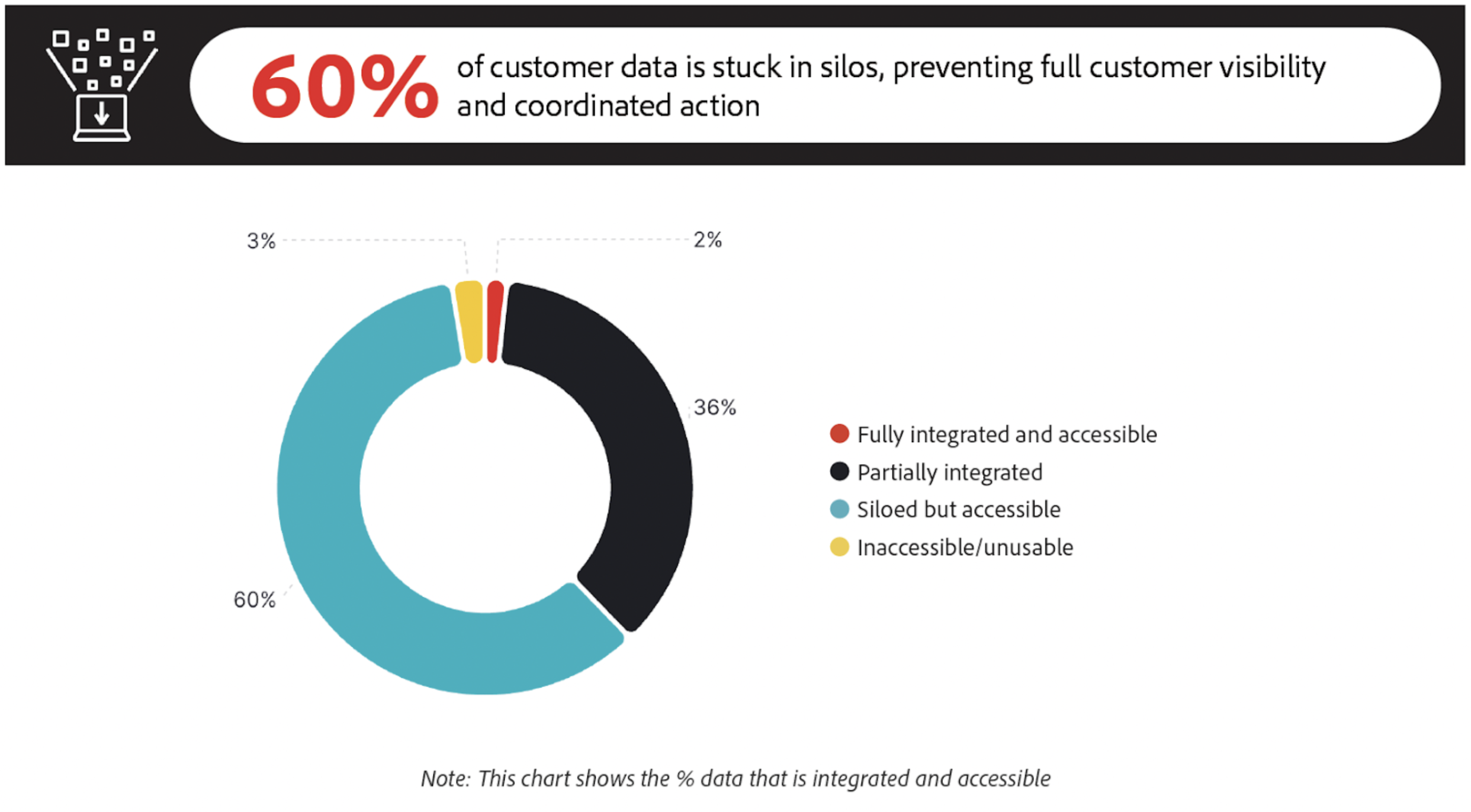
We know there is no shortage of Tools in the market, and many of our clients are piloting or implementing them (often as management dictates). However, being able to carry the data they generate across their MarTech platform is the big challenge. Personalizing the experience can only happen when the data is integrated.
What this means for B2B Tech Marketing
- When analyzing tools designed to help marketing and sales, be sure they have the ability to be integrated into your processes, or if processes must change, heavy customization is not required.
- By being able to merge intent data from multiple sources, marketers can enable more precise account timing.
GenAI Drives Efficiency but demands new quality controls. Content throughput can increase by ~40% and time-to-market can be cut by ~30%. However, leveraging AI tools increases quality control costs by ~30%.
What this means for B2B Tech Marketing
- B2B marketers need robust governance frameworks, QA processes, and human oversight to maintain brand consistency and trust. The winners will pair AI velocity with quality safeguards.
Organizational Structure Matters More Than Technology. Most marketing teams are still organized by product/channel (silos) - ~30% of marketers want to shift to customer journey-based structures.
What this means for B2B Tech Marketing
- B2B tech marketers should advocate for restructuring teams around buyer journeys and lifecycle stages rather than channels or products. This enables true omnichannel orchestration and breaks down the walls between demand gen, ABM, content, and customer marketing.
Dive deeper into our cross-industry research and content.
Channels of commerce continue to proliferate. While the term ‘conversational commerce’ has been around for a while, it’s been used in a very broad context. From rigid FAQ bots to fully adaptive AI assistants, conversational commerce can be really powerful or a horrible experience.
This month, we released a playbook with Microsoft and Avanade titled The Conversational Commerce Advantage. In it, we detail what retailers should be thinking about to build the right foundation. These include:
Multi-Modal: The experience adapts to how the customer chooses to communicate. Voice in the car. Text on the website. Visual input at a kiosk. The interaction works consistently across every touchpoint. The experience adapts to the person rather than forcing the person to adapt to the channel.
Contextual: Every interaction builds on what is already known: order history, preferences, stated needs, recent activity. The conversation starts with understanding. Shoppers feel recognized. Associates have what they need to help.
Continuous: The journey holds together. Research at home carries into the store. A question asked yesterday informs the answer given today. Shoppers never repeat themselves. The relationship builds rather than resets.
Straight from the Shaker: The Challenge with Gaining Value Through Partnerships
Get practical insights and best practices straight from our industry experts as we shake up and serve up our knowledge to help you improve your go-to-market strategies. We share tips each month to help you stay ahead of the game.
In our ongoing series detailing how tech and SI partnerships can be better leveraged through a more strategic approach to the go-to-market, we highlight why so many partnerships struggle to reach their full potential.
The strongest partnerships do not lead with product capabilities. They lead with a market problem that is both urgent and expensive to ignore. The joint value proposition must be specific enough to be defensible and simple enough to be repeated consistently across organizations.
This foundational work is critical. However, institutional incentives reward visible momentum over operational readiness. Partnerships face pressure to demonstrate results before the underlying commercial engine has been constructed. Several systemic factors drive this pattern:
- Activity bias: Press releases, events, and campaigns are immediately visible and easy to quantify. Building messaging architectures and enablement systems is slower, less visible, and rarely celebrated despite being more consequential.
- The field-readiness gap: Marketing can launch campaigns indefinitely, but if the partnership narrative lacks clarity, market response remains muted. Sales can include partners in customer conversations, but without defined motions, conversion rates stay low.
- Organizational structure: Partner teams manage relationships, marketing owns activations, sales owns deals. The space between these functions—where joint go-to-market actually happens—often lacks clear ownership or dedicated resources.
- Resource constraints: Partnership organizations are typically under-resourced relative to their portfolio scope. When managing 15 partnerships with a three-person team, organizations default to what can be executed quickly rather than what will scale effectively.
The cost is predictable: partnerships launch to market before achieving field readiness. Visibility increases. Pipeline generation does not.
Before committing to the next webinar or conference presence, evaluate whether the partnership has achieved genuine market readiness.
Four diagnostic questions reveal operational gaps:
- Can field teams explain the combined value proposition in a single clear sentence?
If not, external audiences will struggle even more significantly. - Do both organizations' sales teams understand when to position the partnership and what signals indicate opportunity?
Vague answers indicate the partnership will remain opportunistic rather than systematic. - Does a defined co-sell motion exist with explicit ownership across both companies?
Without clear ownership of the operational middle, partnerships cannot scale beyond relationship-dependent execution. - Are success metrics outcome-based or activity-based?
If success is measured by "events conducted" rather than "pipeline influenced," the partnership will optimize for visibility over revenue impact.
To learn more, check out our latest blog: Why the definition of a joint go to market with a partner goes beyond events.
On the House
Sip on our team's latest research, speaking sessions, and industry news with a quick scan of our recently published and upcoming work and key takeaways.
The growth of the Incisiv team - Incisiv has entered 2026 ready to help our clients in more ways than ever before. To do that, we knew we had to grow and develop the team. We’re very excited by the next generation of team Incisiv and are thrilled with the work they are doing to help our clients. Please meet our latest analysts:





Industry Insights: In our ongoing effort to keep the industry educated on the latest in how technology is transforming the industry, we’ve launched an ongoing series called Incisiv Insights. These will be ongoing articles, ebooks, and community dinners for our clients to consume as they see fit. Check out a few of our first pieces:

- Synchronizing Data is Step One in Driving Supply Chain Excellence
- The Role of AI Shopping Assistants in 2026
- The Endless Aisle of 2026: AI's Role in Creating a Seamless Journey
Second Round - Incisiv 'In the field'
Here's the latest on where Team Incisiv is speaking and building community:
Incisiv/Avanade Webinar: From Search to Understanding: Conversational Commerce
Join us for a highly topical webinar on February 26th. In this session, we’ll explore how natural-language experiences that maintain context across channels can surface unexpressed demand, reduce friction, and scale human expertise at every touchpoint. We’ll ground the conversation in what retail and brand leaders are prioritizing right now—from AI-powered discovery and clienteling to practical lessons on where legacy interfaces and workflows continue to break down. Register Here
Shoptalk heads back to Vegas this Spring and back to Mandalay Bay. After producing the last two Speakeasy @ Shoptalk Dinners on site, we figured it was time to get away from the same 3 restaurant options and again elevate the experience. This year, we’ll be heading to Pisces at the Venetian - A private dining experience overlooking the lake. We’re very excited and thankful to our sponsors for this year’s event: FourKites, and Microsoft
New York Community Dinner Series. In 2026, we will be producing three unique executive dinners designed to spark conversation and build community. Starting in May and in each subsequent quarter, we’ll select a critical industry theme and use that as the discussion driver.
- The rise of the Agents: Where is Agentic AI going and which use cases will deliver the most value to your business.
- Bringing the sexy back to the store: What is the right mix of art and science in the store environment and how important are the people who run it?
- What does digital transformation even mean anymore?: The state of the union in which digital technologies are continuing to impact ecommerce, supply chains and stores.
- Whose supply chain is it anyway?: Few functions have risen to more importance than Supply Chains. How can a healthy supply chain make an impact on margins and provide a better customer experience?
We are offering the opportunity for one partner per event to join us. For more information, contact Mara Dosso at mara.dosso@incisiv.com
Questions? Want to chat? Here is a combined calendar to book a time.
----
We're here to help you navigate through your biggest challenges and win in this highly competitive market. Anytime you want to talk, book a meeting.