

Having more stores isn't the advantage anymore. Running them consistently, and getting ready for AI shopping, is what matters now.
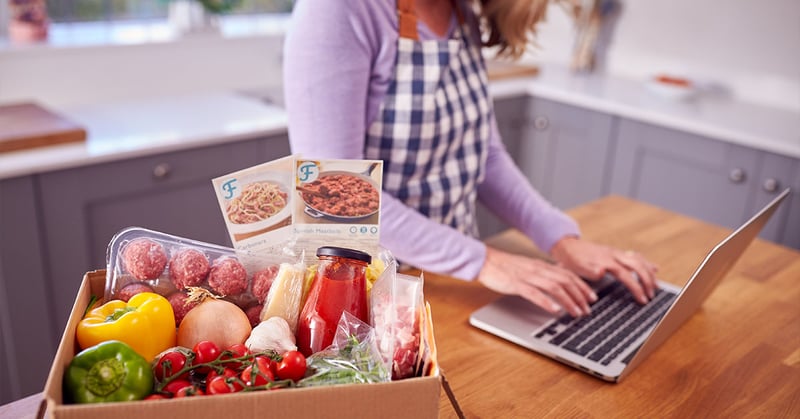
Digital grocery has added a new organizing layer to North American grocery: the order.
Curbside pickup, delivery, substitutions, and time slots may appear to be separate services. In practice, they depend on one system connecting inventory, labor, payments, picking, and fulfillment.
Large grocers have more resources to build this system, but size matters only when it produces consistent execution. As AI shopping tools emerge, the same infrastructure may also influence how orders are created and directed.
The Order Is Becoming the Operating System
In a store-centered model, the retailer’s job is to bring shoppers into a physical environment and make that environment productive. In an order-centered model, the retailer must coordinate the journey from intent to fulfillment.
Making this work requires accurate inventory, simple payment, productive picking, sensible substitutions, dependable scheduling, reliable delivery, and fast issue resolution. No single capability creates the advantage. What matters is how consistently they work together.
Digital grocery should therefore not be managed as an additional channel. The order cuts across merchandising, store operations, supply chain, technology, marketing, and customer service. It reorganizes the business around a promise to the customer.
Scale Matters Only When It Becomes Consistency
Large grocers begin with an advantage. Their networks can become distributed fulfillment infrastructure, while greater order volume allows them to spread technology and logistics costs across a larger business.
But physical scale is only potential. A hundred stores also create a hundred places where inventory can be wrong, picking can be slow, and substitutions can disappoint.
The real advantage is operational consistency: making the same promise across the network and keeping it regardless of which store fulfills the order.
National chains have more resources but also more complexity to control. Regional grocers may have stronger local relationships and differentiated assortments, but fewer orders over which to spread digital costs. The competitive question is not who has the most stores. It is who can turn the stores they have into a consistent, connected commerce network.
The Store and the Basket Now Do More
The store remains the foundation, but it has acquired additional roles. It is now a place to shop, a local warehouse, a pickup point, and a source of inventory for digital commerce.
These roles do not always fit together easily. More online volume can create aisle congestion, staging constraints, and labor pressure. Growth can add complexity faster than profit if the physical network is not designed to serve both in-store shoppers and digital orders.
The digital basket has also created a second business. Online journeys reveal what customers search for, consider, reject, buy, and substitute. Grocers can monetize this intent through retail media.
But the same digital environment must serve both the shopper looking for a useful experience and the brand paying for visibility. When sponsored content improves discovery, both benefit. When it makes the digital aisle noisier, the retailer risks trading long-term trust for short-term revenue.
Retail media is strongest when it improves the commerce experience on which it depends.
AI Could Move Influence Upstream
AI shopping agents could eventually build baskets, compare retailers, evaluate promotions, choose substitutions, and place orders for customers. North American grocers already have much of the infrastructure needed to participate, including digital catalogs, order systems, and fulfillment networks.
The shift toward AI-led commerce is already under way, but the numbers show we are only at the very beginning of the transition. Incisiv's Q3 2026 Grocery Commerce Intelligence, which benchmarks 105 grocery brands in North America, puts Agentic AI Shopping Assistant maturity at just 3.8%, led almost exclusively by enterprise pioneers Dillons, Smith's, and Fry's Food Stores, all Kroger banners. Generative AI-powered search and discovery sits at 2.9%, while product comparison capabilities sit at just 1.9%. Grocers have spent the last decade building physical order infrastructure, but the software layer that mediates consumer choice remains largely unbuilt. With comparison tools under 2% maturity, grocers have not yet lost their direct relationship with the consumer, which gives them a window to strengthen their data feeds and operational consistency before third-party AI agents begin influencing where the order goes.
That creates an opportunity, but also a question. If several retailers can reliably fulfill an agent-generated order, execution may become less differentiating. Influence could move upstream to the interface deciding what enters the basket and where it is purchased.
The grocer may still fulfill the order without controlling all the decisions that created it. This is not inevitable, but it is a possibility worth preparing for.
The Next Advantage Is Scale Conversion
The next advantage will not be scale by itself. It will be scale conversion: turning physical reach into consistent execution, digital activity into customer value, and operational capability into preference.
That requires three shifts:
1. Manage the network around customer promises
Customers experience one outcome: whether the order is right and arrives when expected. Leaders should prioritize inventory accuracy, substitution quality, on-time fulfillment, issue resolution, and profitable order growth.
2. Use customer data to improve the experience first
Retail media and personalization should make shopping easier, not simply create more paid placements. Customer attention can generate revenue, but it can also be depleted.
3. Give both shoppers and their agents a reason to choose the retailer
Accurate availability, transparent pricing, structured product information, clear substitution rules, and dependable fulfillment may become more important in agent-led commerce. But grocers must also preserve human reasons for preference: trusted quality, distinctive assortment, useful loyalty benefits, and reliable service.
North American grocery has moved from a business organized primarily around stores to one increasingly coordinated around orders. The store will remain essential, but its value will depend on how effectively it supports the wider commerce system.