

Grocery shoppers are climbing a "Delegation Ladder," moving from ritual to reorder to AI-managed carts, and brand loyalty is the casualty.
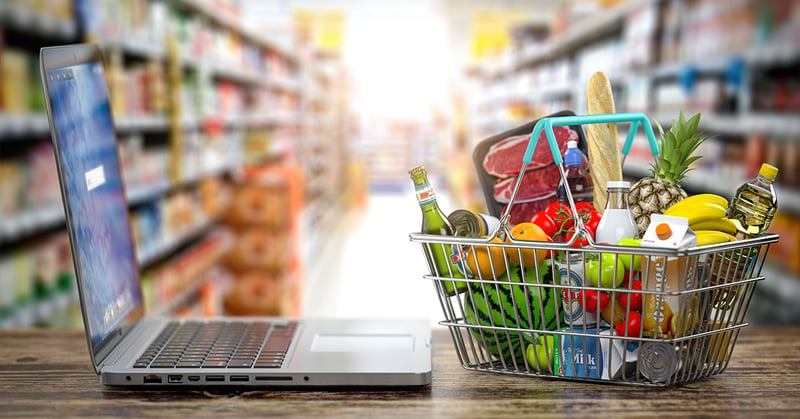
Food is identity, memory, anxiety, and love, purchased roughly two hundred times a year. A shopper walking into a store carries a lifetime of habits with them: the cereal aisle from childhood, the produce section where they learned to judge ripeness, the brand their mother trusted. Grocery shopping is the one commercial ritual with the intimacy of a family habit, and for a century the store got to watch it happen.
The last mile broke that ritual. When an order arrives at the door instead of getting carried out of a store, the aisle disappears, and so does everything that depended on it: the impulse buy near the register, the unplanned detour into a new snack aisle, the theater of a produce display stocked to look abundant. The shopper who used to walk past hundreds of products on the way to milk now sees a list, a search bar, or a cart already built from last week's order.
The physical aisle remains. Its role in the decision is shrinking.
The decision is leaving the shopper's hands
The first generation of digital grocery tried to recreate the store online. Search replaced walking. Digital shelves replaced physical shelves. But convenience's more profound effect is that it removes decisions. The shopper who searches for milk has already decided what to buy. The shopper who opens a saved list is making fewer decisions. The shopper who taps "reorder" may not be making any decision at all.
Incisiv's Q3 2026 Grocery Commerce Intelligence shows this shift already underway. Auto-Cart from Past Purchases, whether a retailer can turn a shopper's order history into a ready-made cart, has reached 35.5% advanced-or-better maturity across the 200 grocery brands measured. Agentic AI Shopping Assistant, whether an AI agent can build and manage that cart on the shopper's behalf, sits at just 2%.
Retailers are getting good at remembering what shoppers bought. They are not yet good at taking over the decision. But the gap is the direction of travel, not the ceiling.
Loyalty Is Becoming a Default
Loyalty used to mean a store you loved, a brand you trusted, a ritual you repeated because it was familiar. Increasingly, loyalty is becoming something less emotional: a default setting that is never re-examined. The reorder button doesn't need to persuade the shopper again; it only needs to make the previous decision effortless to repeat.
That creates an existential risk for consumer brands. A shopper may have spent years choosing a specific coffee in the aisle. If an automated system or AI agent eventually ranks products based on margin, stock, or placement fees, that brand preference may never get another chance to win the basket. The brand loses not because the consumer rejected it, but because they stopped choosing altogether.
The Frame: The Delegation Ladder
Every household sits on one of four rungs:
- Ritual: The shopper walks the store, browses, discovers, and decides on the spot.
- Routine: The shopper still decides, but the range has narrowed to a known set. Discovery has largely stopped.
- Reorder: The list, cart, or subscription makes the choice by default. The shopper intervenes mainly to correct errors.
- Delegated: An agent—human or AI—builds and executes the order. The shopper sets overall intent rather than choosing individual items.
Commercial advantage concentrates one rung above wherever the shopper currently stands. Whoever owns that next rung inherits the basket without fighting for it item by item. A retailer competing for a Ritual shopper fights for attention on every trip; a retailer competing for a Reorder shopper fights for the default once, and collects the reward on every trip after.
Locate the shopper before you build for them
Shoppers are already digital. The real question is where they sit on the ladder today, and the answer is not uniform. Incisiv's benchmark shows meaningful differences by format and region: hypermarkets reach 64.6% advanced-or-better maturity in proxy-shopping capabilities, convenience stores reach 12.9%. North America averages 46.5%; Europe averages 21.7%. Several formats, in several regions, are standing on different rungs at the same time.
A Ritual shopper needs discovery. A Routine shopper needs reliability. A Reorder shopper needs memory. A Delegated shopper needs trust. Every rung a shopper climbs also removes one more moment where a brand could be freshly chosen, so the trade is worth making on purpose, not discovering by accident.
The retailer that wins the next decade will not simply be the one with the smoothest checkout. It will be the one that knows exactly which rung its shoppers are standing on, and builds for the rung directly above it.