

Promotions win one basket, but loyalty wins every basket after. A look at how retail media closes the loop between the two.
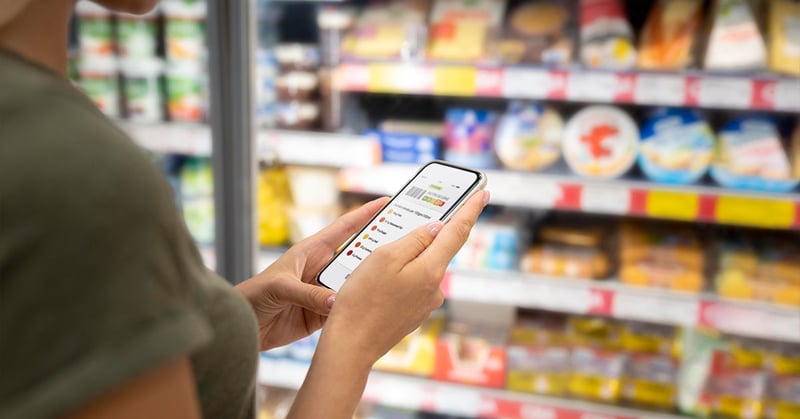
The aisle was the original media network, the endcap its first ad unit, the planogram its first algorithm. Grocers sold that attention to brands decades before anyone coined the term retail media. Then the shopper left the aisle and took the attention with her.
What replaced it splits along a line most vendor decks blur: a promotion wins one basket, fought for fresh every week, while a default wins every basket until something breaks it. Loyalty's real product isn't the point balance or the punch card. It's the choice the household stopped re-examining, the subscription, the auto-filled cart, the personalized price that makes switching feel like a pay cut. Persuasion expires at the register. Entrenchment compounds.
Promotion wins a basket, a default wins every basket
Retailers are highly practiced at winning today's sale. The harder prize is carrying that choice into the next basket without paying to win it again. A promotion wins today's basket. Retention means the retailer does not have to win the customer from scratch each week. Saved lists, instant reorders, and personalized prices help carry that choice into the next basket.
Most retail technology is still built for the discount rather than the habit. Incisiv's Q3 2026 Grocery Commerce Intelligence across 200 grocery brands shows the gap directly.1 Retailers reach 32% advanced-or-better maturity on surfacing weekly promotions, but drop to 18% on recognizing loyal customers during actual service, and 14.5% on digital coupon support. Showing an offer is easier than recognizing a shopper across channels, so the gap does not prove that retailers chose promotions over retention. It shows something simpler: grocery technology is better at making the offer visible than making the shopper feel known.
That capability gap also varies by format and region. Hypermarkets reach 43.2% maturity on these capabilities; convenience stores reach 8.3%. North America averages 32.7%, ahead of Europe at 19.2% and Latin America at 16.8%.
The media opportunity grows with shopper understanding
Retail media turns shopper attention and transaction data into a second revenue stream for the grocer. Promotions create moments of choice, loyalty brings the shopper back, and retail media gives brands access to those moments. As recognition and repeat behavior deepen, the audience becomes easier to understand, reach, and measure.
As retail media grows, customer identity and repeat behavior make its audience easier to understand and its impact easier to measure. The stronger the shopper relationship, the more clearly a grocer can connect media exposure to what happens in the basket.
That relationship will also change as software begins shopping on the household’s behalf. AI agents may ignore traditional banners, but they can still respond to structured offers, sponsored recommendations, price, availability, and delivery terms. Retail media will have to influence not only what shoppers see, but also the information their agents use to choose.
The new mechanics of influence
Promotions, loyalty, and retail media do different jobs, but they converge on the same outcome. Promotions reach the shopper while the choice is still open. Loyalty makes that choice easier to repeat. Retail media turns access to those decisions into income that can fund better prices and experiences.
As software begins shopping on the household’s behalf, a new layer of influence moves closer to the basket itself. Traditional banners will continue to shape discovery, while agents will also respond to structured offers, real-time availability, clear pricing, and delivery terms.
Retail media will need to work across both layers. Alongside visual placements for shoppers, brands may fund machine-readable offers, sponsored recommendations, and service benefits that agents can evaluate against a household’s preferences.
When executed correctly, this creates the ultimate retail flywheel: media dollars fund a superior, highly-automated shopping experience; that experience secures repeat household baskets; and those guaranteed baskets make the grocer's programmatic access far more valuable to brand advertisers.