

Digital grocery didn't eliminate the shopper's unpaid labor; it just moved the cost onto someone else's books, and AI won't change that unless it actually reduces labor or grows the basket.
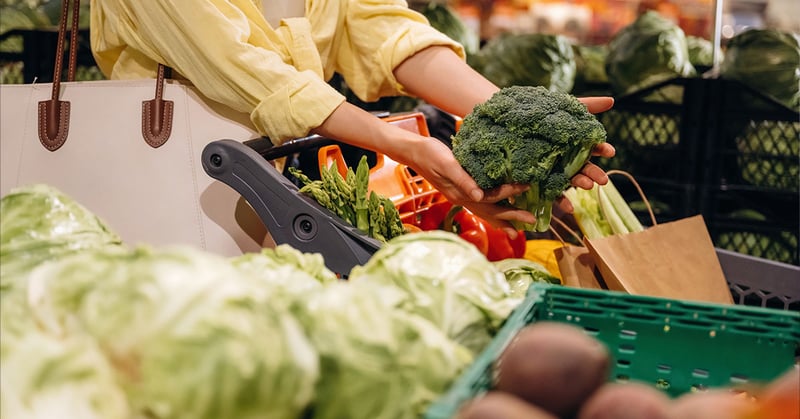
The most important worker in grocery was never on the payroll.
It was the shopper.
Self-service did more than change the store layout. It changed the labor model. The shopper walked the aisles, found the products, checked freshness, accepted or rejected substitutions, packed the basket, took it to the car, and drove it home.
The supermarket was built around that bargain. The store supplied the inventory, the shelf, the price, and the checkout. The shopper supplied a large part of the work.
Digital grocery broke the bargain.
When an order moves online, the work does not disappear. Someone still has to pick the bananas, reject the bruised avocado, find the substitute, pack the order, stage it, and move it to the household. The only question is who does that work now, and who pays for it.
That is the labor ledger grocery leaders need to read before approving the next delivery promise, dark store, automation project, or AI agent.
The old model hid the labor
The genius of self-service was that it made the shopper feel in control while moving work out of the store’s cost base.
That trade made sense because grocery is a thin-margin, high-frequency business. FMI reports that the average net profit for food retailers was 2.1% in 2025. At that level, even a small amount of unrecovered service cost can matter.
The shopper’s unpaid labor helped the model hold together.
It also made the labor invisible. No one thought of the shopper as a picker, packer, quality inspector, substitution engine, and last-mile carrier. Those jobs were treated as part of shopping itself.
That is why digital grocery has been so hard to price. The industry did not add a new experience layer. It moved hidden work onto a visible cost line.
Delivery makes the wage bill visible
Curbside is the mildest break from the old bargain. The store picks the order, but the shopper still drives to the store and carries the last mile.
Delivery removes that contribution. The retailer, courier, or intermediary now owns the pick and the trip.
Rapid delivery goes further. It may add a dedicated inventory position, a dark store, and a delivery network sized for a promise measured in minutes.
Each step can sound like a customer experience decision. It is also a labor decision.
The public evidence has a gap: no US grocer discloses the exact cost to pick, pack, and deliver an order. That absence matters. The cost is important enough to shape strategy, but not visible enough to settle the argument cleanly.
What is visible points in one direction. Walmart's fiscal 2026 annual report attributed its U.S. e-commerce growth primarily to store-fulfilled pickup and delivery, per its 10-K filing. Target's 10-K states plainly that its stores fulfill the majority of digitally originated sales. Albertsons reported 21% digital sales growth for fiscal 2025 in its year-end earnings release. And Kroger, announcing the closure of three automated fulfillment centers in November 2025, said the move would improve its e-commerce operating profit by roughly $400 million in 2026.
That does not mean warehouses or automation can never work. It means every model has to beat a store that already exists.
The right question is not “is this digital?”
“Digital” is too vague to be useful.
A grocery app can help the shopper do work faster. It can move work to the store. It can move work to a courier. It can move work to a supplier-funded media model. It can move work to an AI agent. Those are different economic events.
So the better question is: what changed in the labor ledger?
A feature that helps a shopper build a better basket faster may improve the old bargain. The shopper still does the work, but the work feels easier, faster, or more valuable.
A feature that shifts work to store labor has to pay for that labor somehow.
A feature that shifts work to a courier has to pay for the courier.
A feature that adds an AI layer without reducing paid labor or expanding the basket is not a productivity story. It is another cost line with better language.
Three questions before the next build
Before approving a format, service promise, or AI investment, ask three questions.
Who does the work?
Be specific. Is the shopper searching, selecting, checking, substituting, transporting, or resolving the issue? Is the store doing it? Is a courier doing it? Is an agent doing it? Is the work actually removed, or only moved?
Who pays for it?
The payer may be the shopper through fees, the member through a subscription, the brand through retail media, the supplier through funding, the courier through labor terms, or the retailer through margin.
If the answer is “a little bit of everyone,” the model may still work. But it should be designed that way, not discovered later in the P&L.
Who keeps the margin?
Moving work from the shopper to the business only creates value if the business captures more than the work costs. That value can come from a bigger basket, more trips, better retention, membership revenue, supplier funding, retail media, or lower labor hours.
If none of those are visible, the feature is not a strategy. It is a subsidy.
AI does not escape this logic.
Incisiv's Q3 2026 Grocery Commerce Intelligence shows Generative AI-Powered Search & Discovery, AI search that is genuinely conversational and connected to the catalog rather than a chatbot bolted onto FAQs, has reached advanced-or-better maturity at just 1.5% of the 200 grocery brands measured.
That distinction matters. An AI interface can make shopping feel smarter without making the business economics better.
An agent that helps a shopper build a basket faster can make self-service more valuable. An agent that reduces associate time can lower labor costs. An agent that improves substitutions can protect the trip. An agent that grows the basket can create incremental revenue.
But an AI assistant that answers questions without increasing conversion, reducing labor, improving availability, or changing the economics of the operation is still another interface layered onto the same cost structure. AI may change how the work gets done. It does not change the need for the work to pay for itself.
The technology may be impressive. The ledger is still the ledger.
Price one format honestly
The practical move is not to audit the whole company at once.
Pick one high-volume format: curbside, delivery, a rapid promise, or a specific AI-assisted shopping flow.
Trace every task the shopper used to perform. Identify which party performs it now. Name the payer. Then compare what the format returns with what it costs to run.
This will tell leaders more than channel-level reporting because channels blur the labor transfer. The same shopper may use a store for stock-up, pickup for convenience, delivery for time pressure, and prepared food for tonight’s meal. The mission changes. The labor changes. The economics change.
The grocers that lead the next decade will not ask whether a capability is digital.
They will ask who does the work, who pays for it, and whether the answer holds at grocery margins.